Money basics · Checks
How to Endorse and Deposit a Check for a Minor (Under 18)
7 min · Updated May 2026
Paper checks are still part of adult life and making mistakes can be costly. Pardon the pun. So, we put together a step-by-step guide to teach you how to fill it out, covering what each field does, and how to keep your checking account safe.
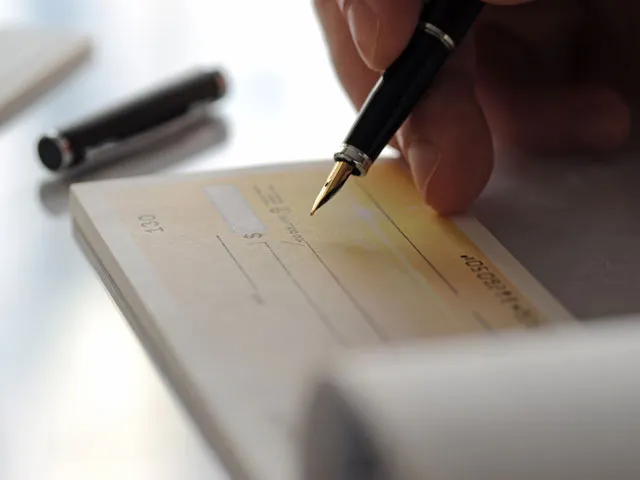
Writing a personal or business check was a core method of conducting financial transactions during the 20th century. It was the primary method in which you paid your mortgage, credit card debt, or other bills (ex. utility). Opening a checkbook to issue a check was a monthly, sometimes weekly, sometimes even daily procedure for some people.
This began to change in 2003, when, according to the Federal Reserve Board, “the number of electronic payments exceeded the number of check payments for the first time in U.S. history.” The change can be attributed to an increase in online banking, mobile payments, and Automated Clearing House (ACH) Payments. People, both in their personal lives and for their businesses, are conducting more and more paperless transactions, a fact that has been magnified as a result of the COVID-19 pandemic.
That said, paper checks are still a viable form of payment, and the proper operation (and maintenance) of a checking account is an essential part of personal finance. Mistakes in the check-writing process are not only a hassle, they can be extremely costly. To help you avoid those costly mistakes, we have put together a step-by-step guide that discuss the parts of a check and how to write one.
Before we move on, should you find that you made a mistake, such as writing the wrong dollar amount, you will need to void the check. A voided check prevents the check from being cashed by a commercial bank, credit union or other financial institution. Also note that you can intentionally void a check, a process that is often used when setting up direct deposit.
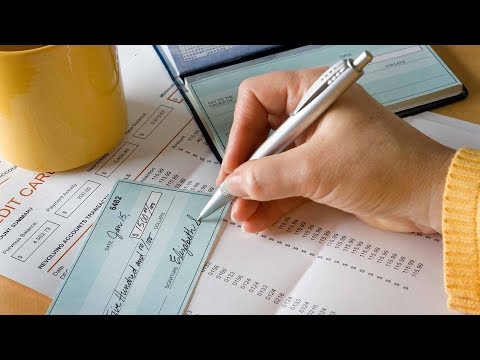
Table of Contents
The Address (#10) isn’t shown in the example below because it is not a real check. Your address, or the business address, will be listed in the top left corner of a paper check.
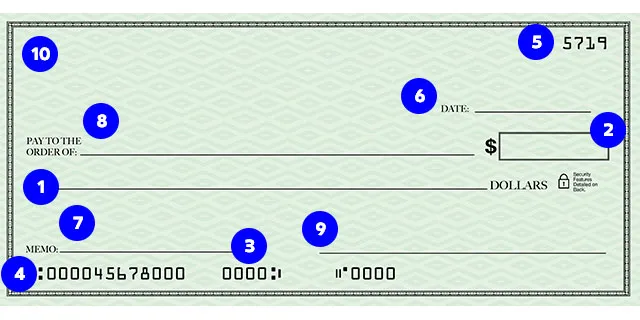
Prior to filling out a check, you’ll want to make sure that you have the right supplies & tools. In this case, a personal check and a black or blue pen.
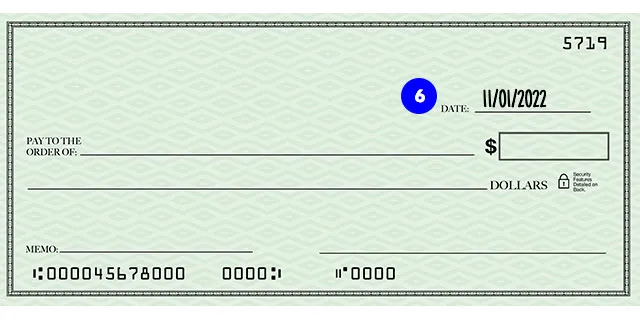
The date line can be found in the top right hand corner near the check number. Use the current date, which, in the United States, should be written out in Month / Day / Year format. Dating your checks helps to keep your check register accurate.
Avoid postdating checks. Postdating is the act of putting a future date on a check. A bank can cash a postdated check prior to the date you wrote on the check if you have signed the check.
In the formatting below, M stands for month, D stands for day, and Y stands for year.
Learn: Do Checks Expire?
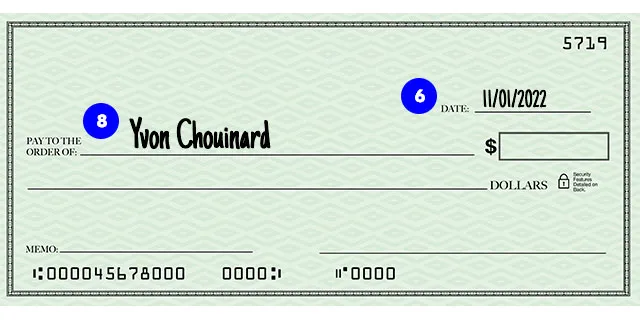
The legal full name of the person or business receiving your check, aka the person you are paying, should be written legibly on the line that states, “Pay to the order of.”
If you have any questions or are unsure of who to write the check out to, do not sign the check.
Also, if you’re wondering who Yvon Chouinard is, he is the founder of Patagonia who just donated Patagonia to try and help fight climate change. We thought him a good example to use.
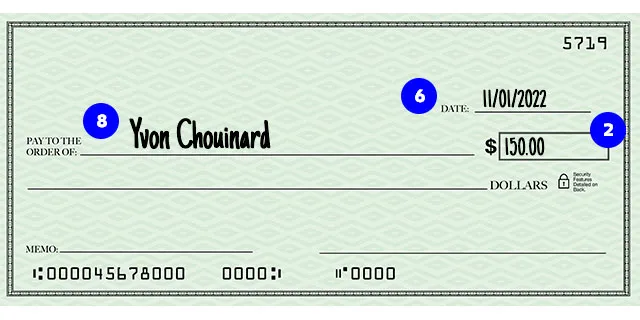
Write down in numbers the amount you wish to pay a person or business in the amount box. The small box for the amount is the outlined rectangle found to the right of the dollar sign on a paper check. The amount that the check is being written for determines what you need to write down.
For example, if you were writing a check for one hundred and fifty dollars, you would write “150.00” in the amount box. Be sure to include the dollar amount, cents, and decimal when writing a personal check.
We do not recommend that you write the amount of the check using these techniques. But, we recognize, and often receive from our customers, checks that adopt these practices.
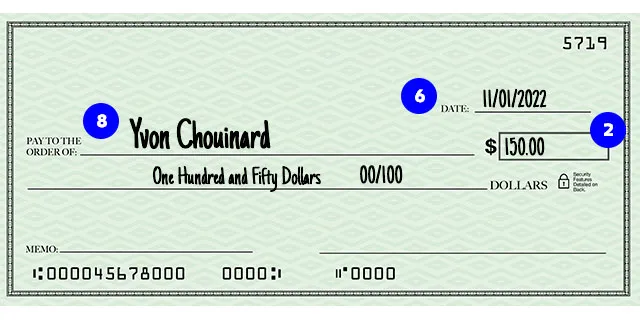
Below the payee line is the line in which you write out the value of the check in words. It is the line that ends in “Dollars.”
For example, if you were to write a check for $50.50, you would write “Fifty Dollars and 50/100” on the written amount line. The fraction represents the amount of cents. We recommend that you always use the fraction, whether there are cents or it if is a whole dollar amount. For the latter, you would write “and 00/100”.
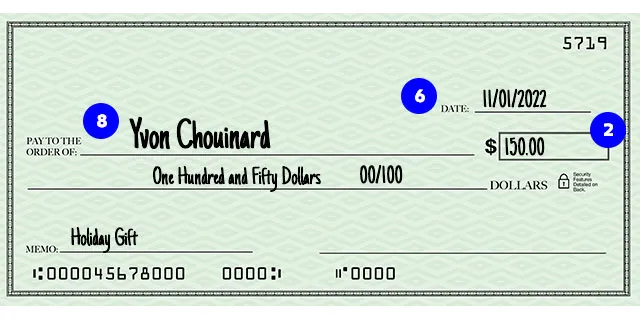
Writing a memo, while optional, is good for reminding you what the check was written for. If you’re into categorizing your expenses, perhaps for an annual summary of your spending, a memo will help.
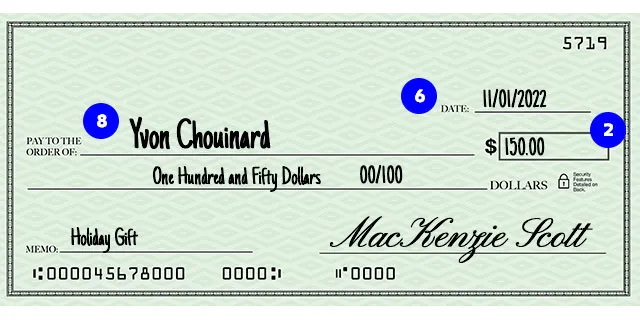
Signing your name on a paper check authorizes a financial institution to pay the payee. It is your agreement that the amount shown should be given to the person cashing it. The signature line can be found in the lower right corner of the check.
Reminder: Always sign the check last.
For those wondering who MacKenzie Scott is, she is the ex-wife of Jeff Bezos. She has recently been donating large amounts of capital to charitable organizations.
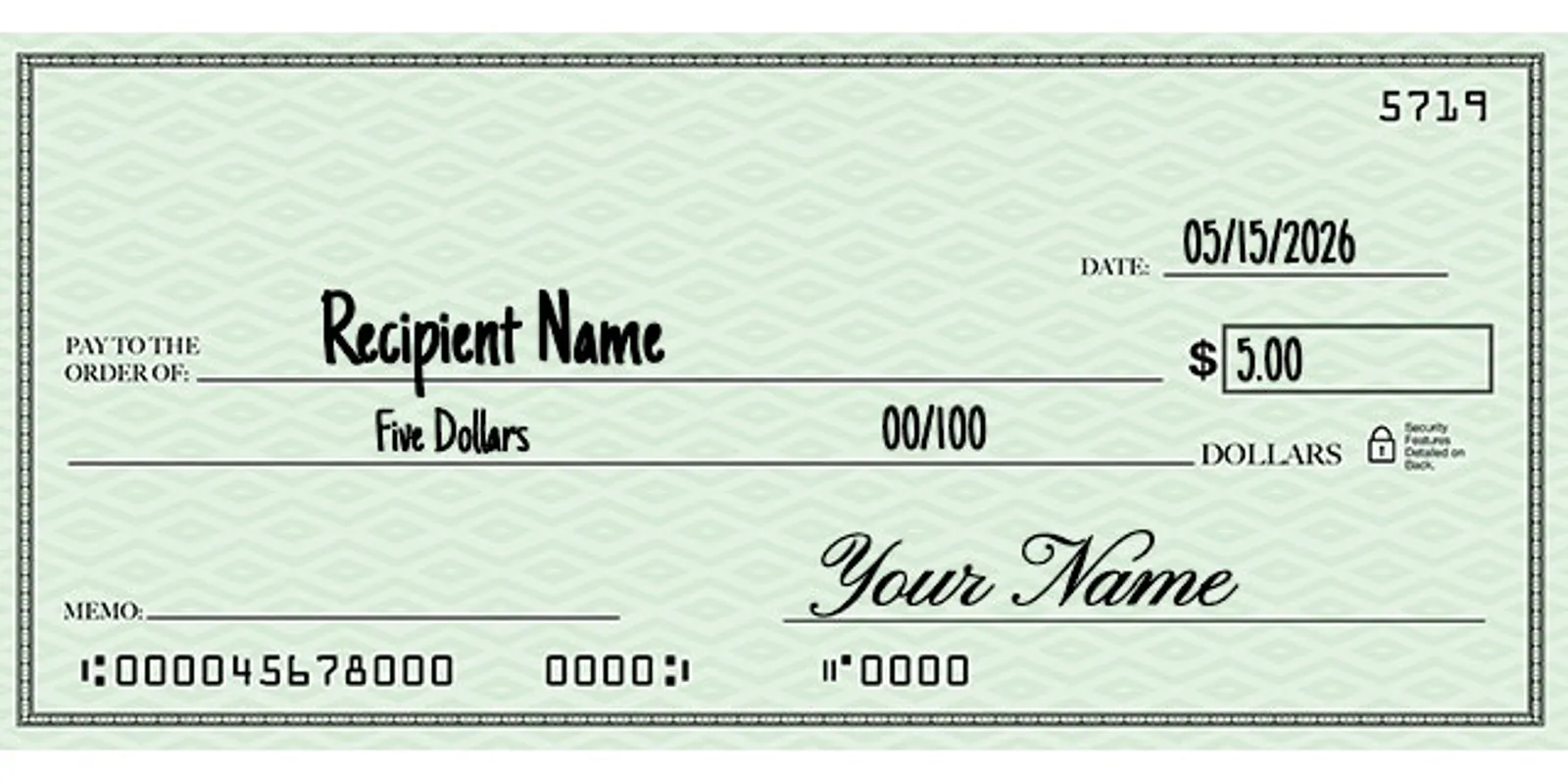
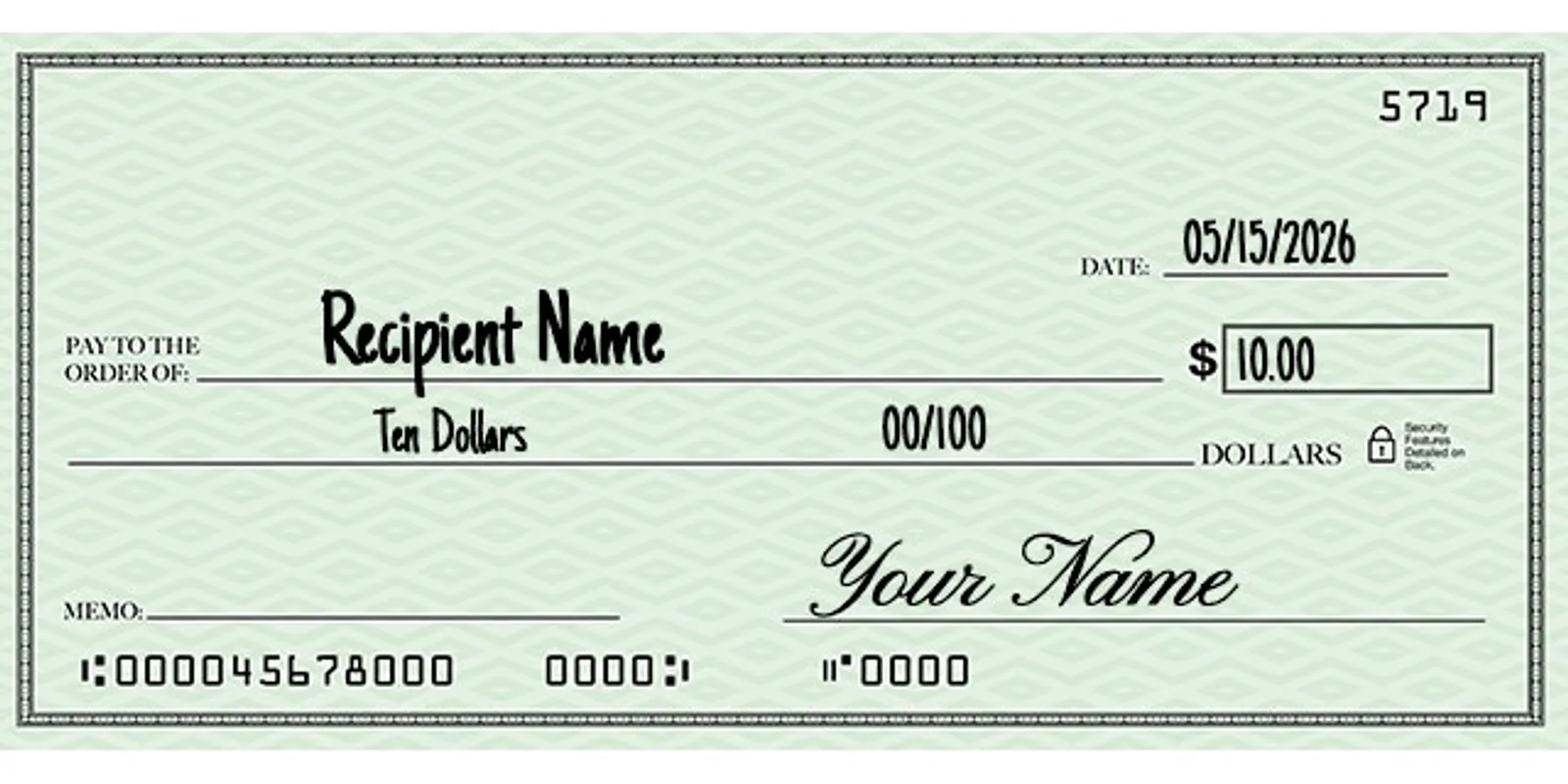
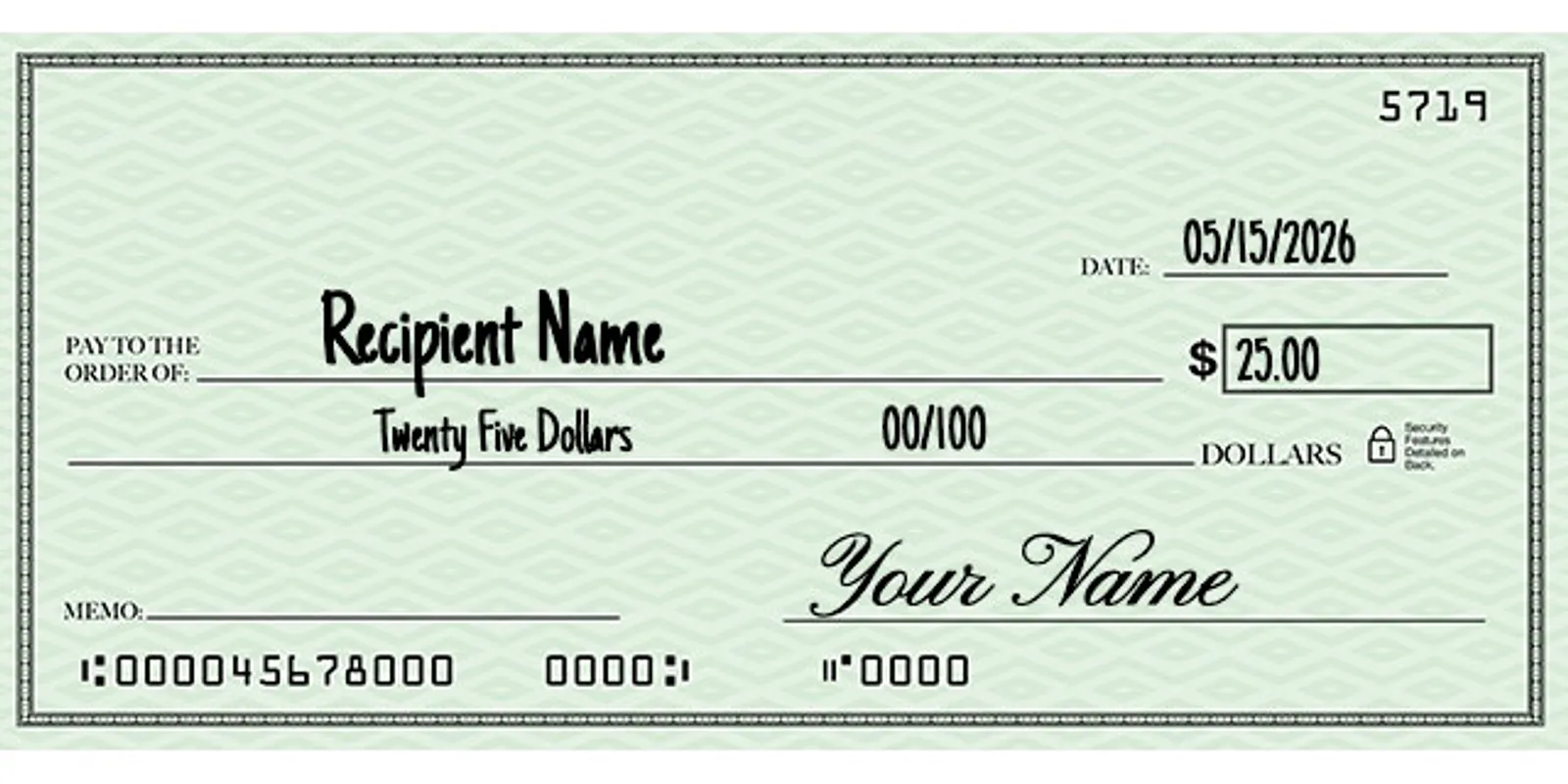
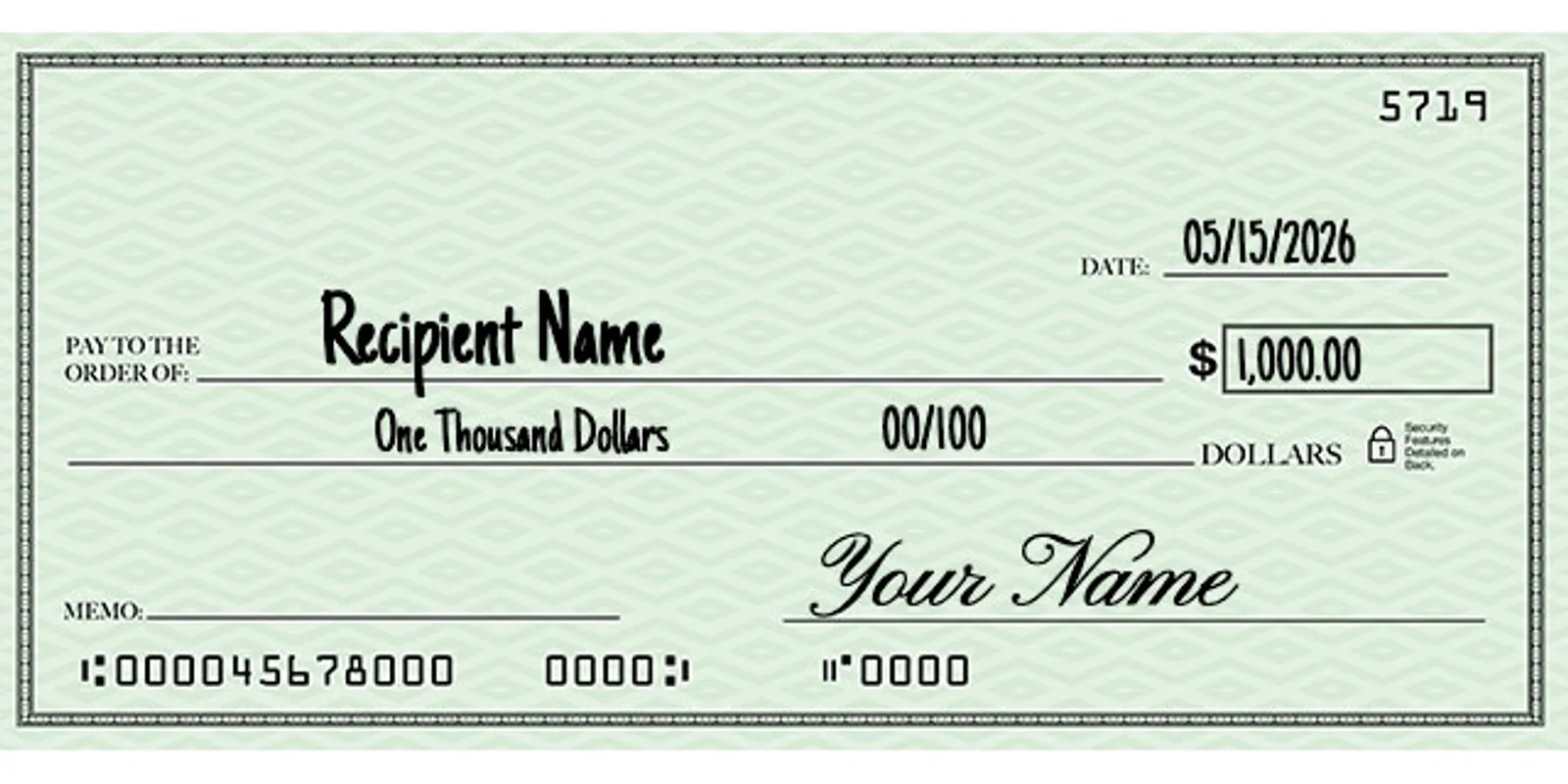
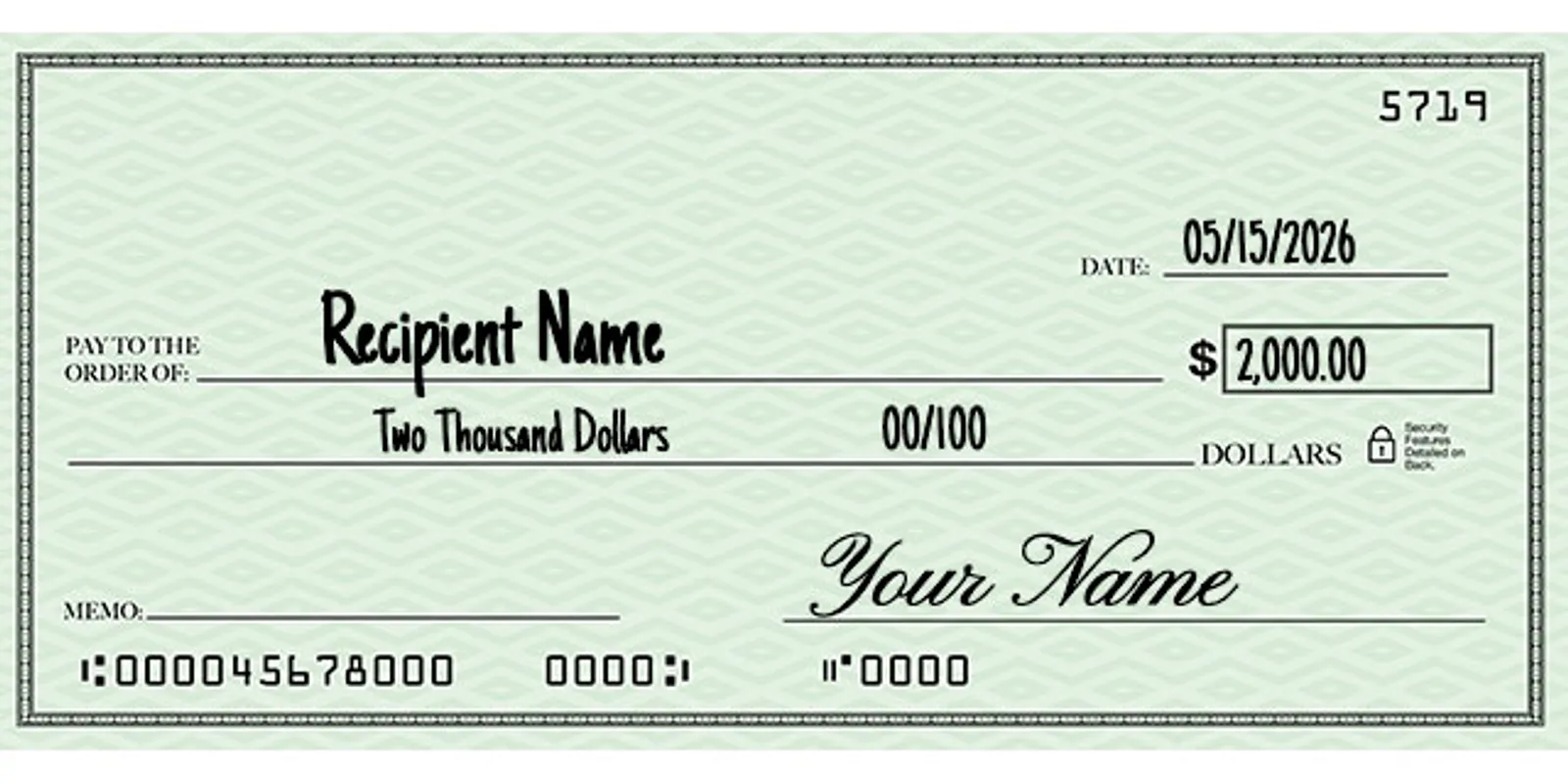
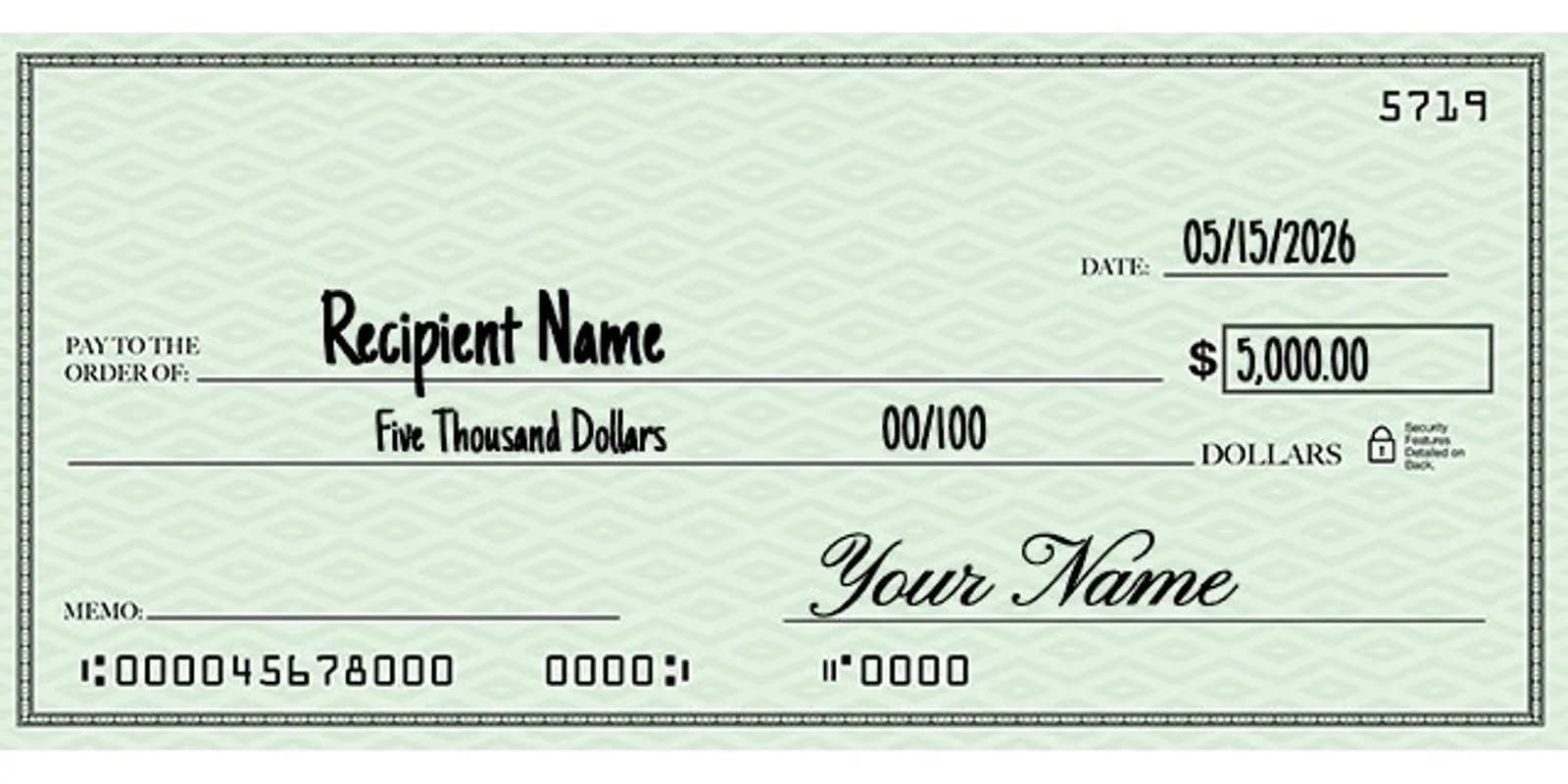
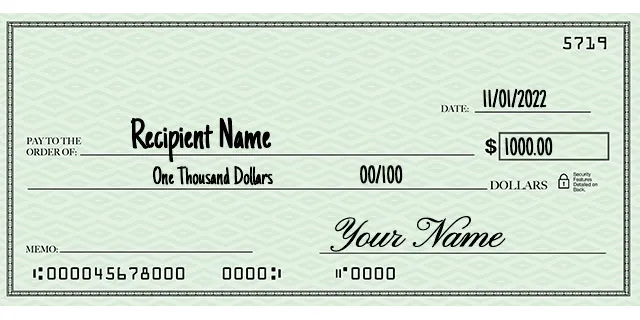
Filled-out examples for the dollar amounts people ask about most. The written-amount line (the one that ends in "Dollars") is the legal amount, so we've shown exactly how to phrase it for each.
Balancing your checking account is a straightforward process if done correctly. You should keep a record of every deposit into or withdrawal out of the account in your checkbook’s check register. This includes any paper checks, debit card payments, ATM withdrawals, online bill payments, as well as other source of payment that is linked to your bank account.
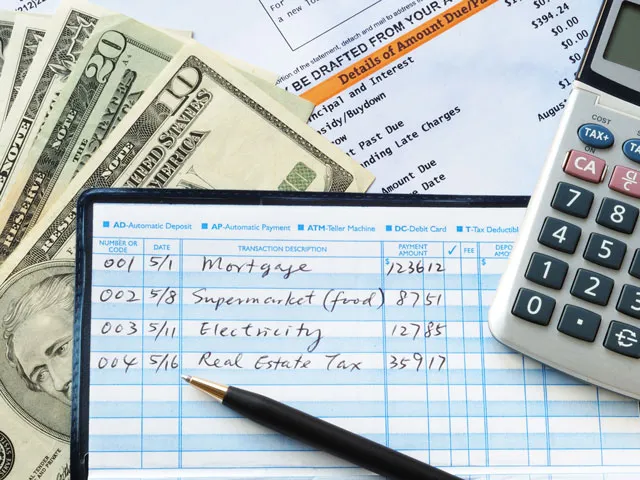
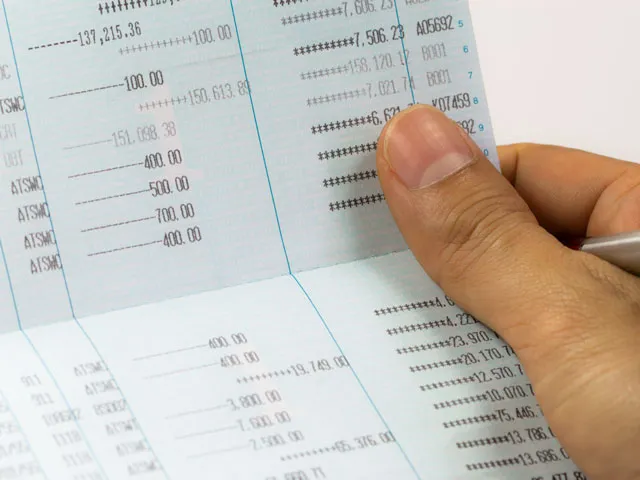
It is important to take a moment to compare the numbers in your check register to your monthly bank statement when it is received, either by mail or online. The reconciliation process will show you if you have any outstanding withdrawals or unlisted deposits that you need to account for. If you spot an error when reviewing the data, double check your math. It may be that you forgot about a new automatic payment that was set to withdraw monthly from your account - a gym membership comes to mind. If that is the case, make sure to add it to your register every month.
One area of reconciliation that trips people up is operating your checking account in a hybrid fashion, using both paper checks and online banking services. Sure, that gym membership fee would have shown in the history of your mobile banking app, but an uncashed or lost check would not. If you have a paper checking account, it is crucial to maintain a check register, as doing so will help you save money by avoiding potential overdraft fees.
Reducing your bank account’s exposure to error, and more importantly fraud, is the best way to keep peace of mind. Here are a few tips that will help you on your journey.
Remember, a blank check and a messy signature could go a long way toward disaster. Someone could jot down today’s date, any amount of money, and scribble your name in the signature line in an attempt to steal your money. Take these security tips to heart before writing your next check.
A check is a signed instrument that instructs a bank or credit union to pay the amount shown on the check to the bearer. The purpose of writing a paper check is to distribute money from one person or entity to another.
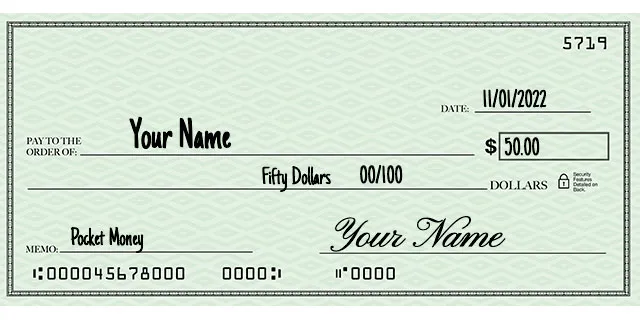
You write a check as you normally would, only you write your legal name in the “Pay to the order of” line.
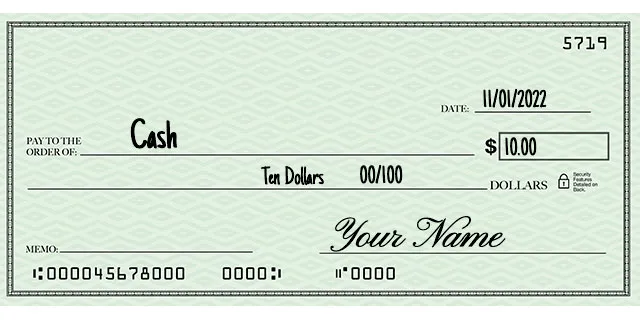
You write a check as you normally would, only you write “Cash” in the “Pay to the order of” line. We advise against writing checks to cash as they can easily be misplaced or lost. And, when you write a check to cash, it effectively becomes cash. Should someone find it and deposited it, you would be out the value of the amount listed. If you didn’t fill out an amount, you just created a fully authorized blank check.
In the chance that this occurs, contact your bank immediately and request a stop payment using the check number of the lost check as your guide.
You can request a counter check or cashier’s check from your bank. A money order can effectively function as a check.
A counter check is a check issued directly from a personal banker or bank teller at a branch. A counter check will have your bank account information (bank account number and ABA routing number) on it, so you would write it out as you would write out a regular paper check. Check printing fees may apply with a counter check.
You won’t. In order to get a cashier’s check, you will need to provide a banker with all of the check information and have them print it for you. The difference between a personal check and a counter check is that a cashier’s check is guaranteed by the issuing bank, whereas a counter check is drawn upon the funds in your account.
Writing a check out to a minor is a little bit different than to a legal adult. Different banks, credit unions and other financial institutions have varying rules for how they deal with children and their parents or legal guardians. As such, it requires a little more effort on the part of parents/guardians to properly endorse a check for a minor.
In the end, you, the payor, can write the check directly to the minor as you would any adult. Or, you can be kind and write it out to the trustworthy parent to make it easier on them. That way the child’s caretaker doesn’t need to involve birth certificates and other paperwork when they bring the check to their local bank branch.
Take note to avoid any misspellings. Also, pay attention to whether or not you must label the payee as a minor in the memo. Your own bank or credit union should be able to give you some insight into the matter.
We’ve learned about the anatomy of a check. We’ve learned how to write a check. And, we’ve learned the reasons why you want to keep your checking account balanced and secure.
Can I write a check for less than a dollar?
Yes. Write the numerical amount as $0.XX (e.g. $0.75) and the written amount as "Zero dollars and 75/100". Banks process sub-dollar checks the same way as any other.
What happens if the numerical amount and the written amount don't match?
The bank pays the written amount. The line that ends in "Dollars" is considered the legal amount. This is why filling that line in carefully matters more than the box.
Do checks still expire?
Most personal and business checks become "stale" after six months — banks may refuse to cash them, though they aren't legally required to. U.S. Treasury checks expire after one year.
Should I postdate a check?
You can write a future date, but the bank is not required to honor that date. In most states, a check can be cashed on the day it's presented regardless of the date written on it.